

When life as we know it is flipped upside down, we struggle to make sense of it all. Why would a good God allow this to happen?
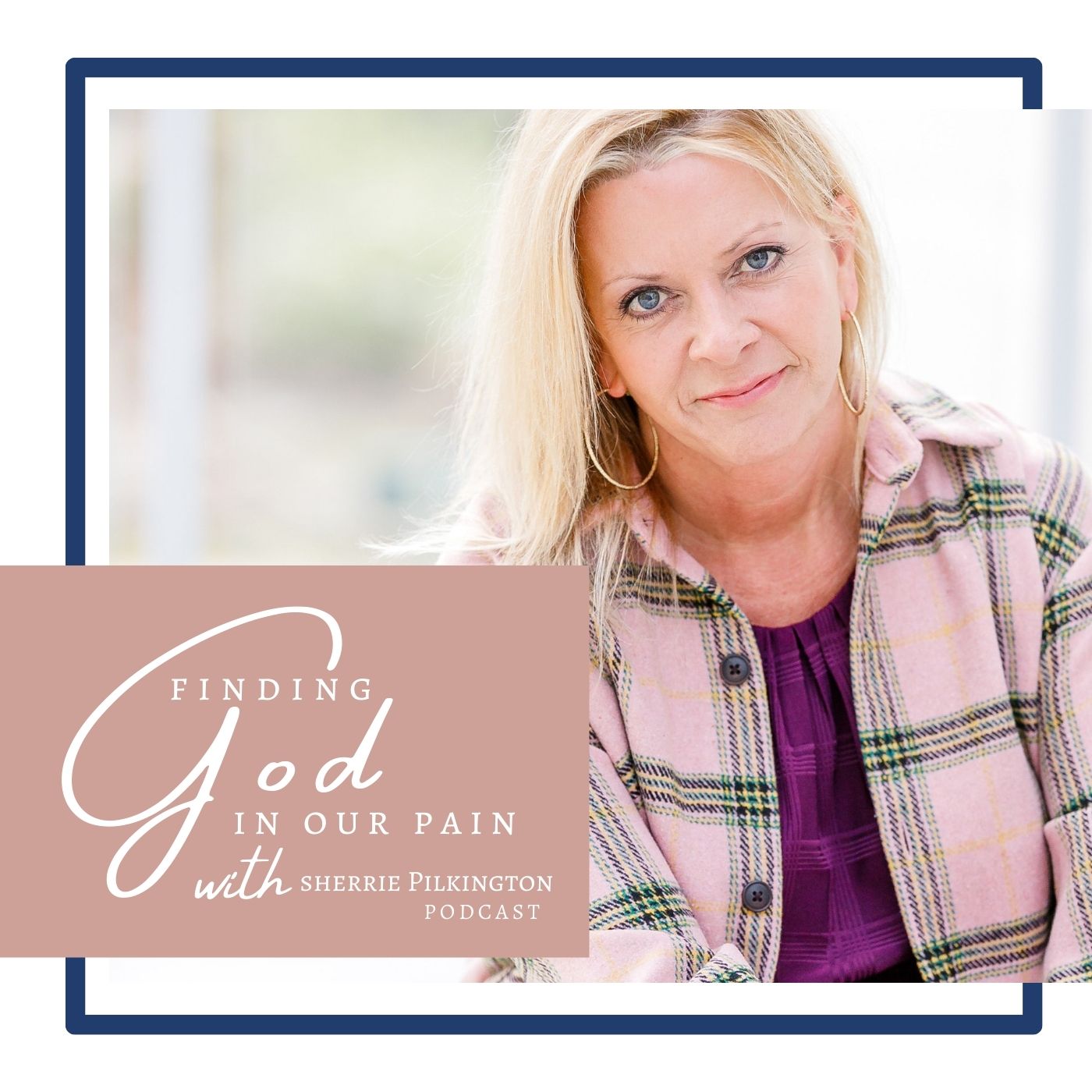
Hi, I’m Sherrie Pilkington, your host of Finding God In Our Pain.
In 2018, when I unexpectedly lost my husband of 32 years, questions erupted out of my deepest despair. Since then, I’ve continued to search the heart of God for what He has to say about pain and suffering.
In this podcast we’ll discover how God enters into our pain, shepherds us through our darkest valleys, and leads us to green pastures once again.
I’ll bring you firsthand stories from women who allow us into their authentic struggles, along with professional advice from experts, counselors, and others who can help us navigate pain.
Join me, as we discover God’s answers to the deepest cries of our shattered hearts.
SUMMARY:
– “Hurting people hurt people—but narcissists mean to. The higher up the spectrum, the more deliberate and sadistic it becomes.”
– “A normal person can self-reflect and repair. A narcissist can’t or won’t—self-reflection feels like death to them.”
– “You didn’t cause this, and you can’t fix it. It’s not your fault.”
– “As darkness rises, so does the glory of God. What the enemy meant for evil, God can turn for good.”
– “If you move slowly and keep physical/emotional boundaries while dating, a narcissist will often disqualify himself.”
Annette’s 4-category spectrum
– Category 1: “Normal” human flaws—can be selfish or insensitive at times, but can self-reflect, repent, repair, and grow.
– Category 2: Emotionally immature; hurtful without calculated malice. Constant defensiveness, blame-shifting, meltdowns when confronted. Change is unlikely; aim is reducing chaos and managing wisely if you choose to stay.
– Category 3: Calculated and conniving. Love-bombing, data-mining your hopes/fears to weaponize later. Public charm/private cruelty. Dangerous in church/community settings. You won’t resolve this.
– Category 4: Sociopathic/psychopathic traits. Amplified cruelty and real danger. Divorce triggers the “monster.” Requires safety planning, documentation, and expert help.
Dating red flags and protection
– Love-bombing: intense pursuit, “soulmate” language, over-the-top gestures, fast-moving timeline.
– Boundary testing: pushes past your limits; discomfort rises quickly.
– Inconsistencies and subtle cruelty: backhanded comments, smirks at tears or grief, delight in your pain.
– How to protect: move slowly, keep physical/emotional boundaries early, listen to the Holy Spirit and your discomfort, look for patterns (not isolated incidents), and let time test character.
If you stay (Category 2 dynamics)
– Goal: not fixing him, but wisely reducing chaos and preserving your well-being and the household’s stability.
– Tactics: reframe requests in terms of what benefits him; avoid head-on confrontation; build your life outside the relationship (calling, ministry, education, friendships).
– Support: grief the loss of the dream; get equipped; find a small, trusted peer group who truly understands narcissistic abuse.
If you’re considering leaving (especially 3–4)
– Safety first: if there’s a risk of harm, have a go-bag for you/kids/pets and get out.
– Prepare: document everything; expect financial sabotage; avoid using the term “narcissist” in court unless there’s a diagnosis.
– Kids: courts may be vulnerable to “parental alienation” claims; consider a High-Conflict Divorce Coach to reduce legal costs and navigate strategy.
– Church/community: narcissists often “borrow” your credibility and pre-poison relationships. Find a healthy church culture and rebuild wise support.
Biblical considerations for divorce
– Abuse, abandonment, adultery are valid biblical grounds. With minors, weigh carefully: safety, modeling for children, and the realities of family court.
Healing and identity
– Post-abuse, identity is almost always impacted. You can be 10 years out and still hear their voice in your head—self-abuse by proxy.
– The path: clean up the past (lies, agreements, unresolved pain), rebuild identity in Christ, then step into power and authority with wisdom and boundaries.
– Beauty must rise with pain: intentionally add joy, nature, creativity, and community to counterbalance suffering.
Church and parenting insights
– Teach kids the Word, discernment, and healthy vs. unhealthy relationship dynamics. Christlike love includes boundaries and walking away when necessary.
Programs and resources Annette mentioned
– Living Well While Staying: coaching for women who choose to remain in Category 2 marriages, focused on reducing chaos and rebuilding a meaningful life.
– Cinderella No More Academy: membership community and tools for recovery and growth.
– Cinderella Conversations: 4-session discovery series on identifying narcissistic dynamics, tactics, false guilt, and spiritual warfare.
– Upcoming book: Cinderella No More: Becoming Ella (target 2026). She’s seeking early readers for feedback.
– For severe trauma/PTSD: consider a Christian therapist specializing in trauma; complement with coaches who understand narcissistic abuse. Interview for fit.
One thing to remember
– You didn’t cause it, you can’t fix it—and this isn’t the end. With God, this can be the beginning of a new, stronger chapter. You get to write the next chapters with Him.
PODCAST INTRO:
My guest Annette Chesney is a Christian coach, speaker, and seasoned recovery professional who equips women healing from narcissistic abuse.
Narcissistic dynamics can be hard to spot because they often look like ordinary relationship friction at first. Many people struggle to tell the difference between someone who is simply hurting and occasionally hurtful, and someone who persistently harms others without accountability.
One useful way to think about it is as a spectrum: not everyone with difficult traits is a narcissist, and not every narcissistic person behaves the same way. Understanding this range can help you decide what you’re seeing—and what to do next.
But before you think that keeps you in the dark….Annette has created a spectrum that consists of 4 categories or types of narcissists including 10 different characteristics. What she shares is very interesting and from my experience very accurate. Annette’s work is done both one-on-one and in groups. She talks primarily from a women’s point of view with regard to narcissistic abuse but she did say men are subject to women narcs as well.
Annette talks about common red flags and she says pay attention to patterns over time rather than isolated incidents; that wider view tells the truth.
Annette even shares about how she coaches women who choose to stay in a challenging relationship…she teaches “management” strategies that focus less on changing the other person and more on stabilizing her client’s environment, protecting her energy, and minimizing chaos. A few of the examples she gave were learning how to reframe requests so they’re seen as mutually beneficial, limiting circular arguments, and building a strong support system outside the relationship.
She even touches on the subject for when separation or divorce becomes necessary and minor children are involved. She alerted us to the fact that trauma symptoms, including anxiety and PTSD‑like responses, are not uncommon adding that qualified mental health support and targeted coaching can help you recover clarity and confidence.
Even with the reality of living with the effects of narcissistic abuse…the dismantling of who you are, loss of confidence, identity, goals, dreams etc. , Annette says recovery is possible. Many people find that healing involves unpacking earlier hurts, challenging false beliefs, rebuilding identity, and learning durable skills: boundaries, self‑care, emotional regulation, and discernment. Getting connected with the right help will make all the difference and get you to what she calls…your Kingdom Zone of Impact where you’re living with identity and purpose in Christ.
Her parting words were for the listener to remember two things that are worth holding onto: you didn’t cause someone else’s narcissistic pattern, and you can’t fix it for them. What you can do is prioritize safety, educate yourself/get informed, surround yourself with wise support, and invest in your own future. Whether you’re staying, preparing to leave, or rebuilding afterward, the next chapters can be healthier—with Christ those next chapters are filled with restoration and redemption, they can bring clarity, strength identity and purpose… and they’re yours to discover with the Lover of Your Soul, the One who never abuses you, never fails you, Jesus.
Live Loved and Thrive!
Sherrie Pilk
Connect With Annette:
LinkedIn: https://www.linkedin.com/in/annette-chesney/
Website: https://annettechesney.com/
Visit her website for more information on the programs and resources Annette mentioned:
– Living Well While Staying: coaching for women who choose to remain in Category 2 marriages, focused on reducing chaos and rebuilding a meaningful life.
– Cinderella No More Academy: membership community and tools for recovery and growth.
– Cinderella Conversations: 4-session discovery series on identifying narcissistic dynamics, tactics, false guilt, and spiritual warfare.
– Upcoming book: Cinderella No More: Becoming Ella (target 2026). She’s seeking early readers for feedback.
– For severe trauma/PTSD: consider a Christian therapist specializing in trauma; complement with coaches who understand narcissistic abuse. Interview for fit.